“The public library currently stands as the primary resource through which Internet access, education, and resources are available. As a result, public libraries are relied on more than any other cultural institution to overcome the digital divide, teach digital literacy, and foster digital inclusion.” … “Yet, public libraries are predominantly excluded from the funding made available for digital literacy and digital inclusion, and are excluded from the decision-making processes related to policy in this area.”
P.T. Jaeger
This essay was originally written to be part of the panel discussion “Dialogues on Justice: Libraries and the Space of Democracy.” Alongside professionals and artists such as the President of Brooklyn Public Library, Nick Higgins; the Director of Outreach at Brooklyn Public Library, Eva Raison; the creator of Free Black Women’s Library, Ola Ronke Akinmowo; an activist from Urban Librarians Unite, Lauren Comito; and artist Maryan Monalisa Gharavi; I was meant to be an emerging student voice. I had chosen to raise questions pertaining to myself and my fellow students’ future jobs in light of a defunding of physical spaces, the possibilities of the internet and library websites as supplements to physical spaces in relation to democracy and ways in which they affect and are affected by the digital divide.
On March 11, of 2020, the world Health Organization declared COVID-19 a global health pandemic and on March 16, the US government urged citizens to practice social distancing for two weeks. As these two weeks progressed, a delayed seriousness regarding the illness started to be reflected in the American news and political updates, followed by another recommended month of social distancing and stricter guidelines. This resulted in public institutions, schools, restaurants and other gathering spaces such as entertainment venues closing their doors to the public, leaving millions of workers furloughed or completely without a job. This also meant that all educational institutions had to move online.
My previous discussion and inquiries never felt so important, or too late. I had been focused on how the library as a public forum and a democratic space had a social responsibility of inclusion and education. I was pondering the ways in which the internet and library websites still lagged behind when helping to remove barriers to information and exploring theoretical discussions about the third generation digital divide. I was asking questions such as, what happens when access and information become a commodity?; What happens when public forums, ie. libraries are defunded and physical resources shrink?; Are the digital aspects of libraries in tune with the needs of the communities they are servicing?; And what barriers still need to be removed to help promote ease and access regardless of socioeconomic background? This pandemic and the physical closing of public institutions have thrown these issues into an immediate and global light.
Due to most of these issues and attempted resolutions being played out in real time, tracking the progress and effects of this new digital world on vulnerable populations is not yet a possibility. However it does beg the question of how will this change our future and impact our understanding of the digital divide, education and access to information. Originally my main focus was on the digital divide and on actions that could be taken to be proactive instead of reactive in regards to a shrinking physical space and a growing and diverse technology use. I do not believe that any institution could have been fully prepared to transition into the climate that we are currently living in, however I feel that had steps been taken to account for the growing and diverse technology used by patrons, some sense normalcy might have been achievable for them.
As library students, one of the future fears we are made aware of is federal defunding, which carries the accompanying threats to physical and digital collections, maintenance and integration of new technologies, and special services and programs that help patrons and local communities. The library is constantly working towards being more socially responsible and creating safe democratic spaces that allow for civic discourse and engagement. There is no dispute among our community when it comes to the roles a library can, and has, played in helping to achieve social inclusion, access and literacy. J. Buschman states in On democracy and libraries, that “there is much empirical evidence that libraries are valued by their publics in democracies because they equalize resources and promote sociability across classes and that this becomes increasingly important during difficult economic times; this is so despite broad perceptions of librarianship’s decline”. (Bushman, 2018, p. 27) Having a physical space for this to occur remains vital. This statement by Bushman highlights current concerns during the pandemic as well, with many out of work and resources low, history has shown that the public turns to the library for aid.
As students we are taught to consider the political background controlling public funding, the commodification of information, and the emerging monopolistic tendencies of vendors and the ways in which we can promote and ensure democratic values. Defunding would affect different locations in a variety of ways, though the ALA states that the largest hit would undercut “entrepreneurship, employment, and education in communities across the country” (American Library Association).
This, combined with the ever growing use of technology and the differences within them concerning internet or data access, website compatibility and paywalls, begs the question of how to be proactive rather than reactive. Is there a way to unite online programs and services in ways that not only ensure access and usability but also help supplement the democratic sphere that physical libraries have strived so hard to achieve? As John Palfrey highlights in his book, BiblioTech: Why Libraries Matter More Than Ever in the Age of Google, to move forwards successfully and create an open non commercialized space, libraries should not “cede the digital realm to the likes of Amazon.” (Cohen, 2016) Dutch scholars, A. van Deursen and J. van Dijk state in The first-level digital divide shifts from inequalities in physical access to inequalities in material access, that: “By extending basic physical access combined with material access, the study finds that a diversity in access to devices and peripherals, device-related opportunities, and the ongoing expenses required to maintain the hardware, software, and subscriptions affect existing inequalities related to Internet skills, uses, and outcomes.” (van Deursen, 2019). Although not everyone has access to a computer or a smartphone, smartphones have changed the ways in which people search for information in terms of website design and compatibility. Studies also reflect the growing use of smartphones in relation to job applications, government information, social media interactions, and education.
With the physical locations of educational institutions and libraries being closed, one can safely assume that this use has increased. Libraries are making monumental efforts to help their communities, as we have seen throughout other national and local crisis’, such as removing late fees, door pick ups, and mobile hotspots.
SelectED ANNOTATED BIBLIOGRAPHY
van Deursen: The first-level digital divide shifts from inequalities in physical access to inequalities in material access
Abstract from author:
For a long time, a common opinion among policy-makers was that the digital divide problem would be solved when a country’s Internet connection rate reaches saturation. However, scholars of the second-level digital divide have concluded that the divides in Internet skills and type of use continue to expand even after physical access is universal. This study—based on an online survey among a representative sample of the Dutch population—indicates that the first-level digital divide remains a problem in one of the richest and most technologically advanced countries in the world. “By extending basic physical access combined with material access, the study finds that a diversity in access to devices and peripherals, device-related opportunities, and the ongoing expenses required to maintain the hardware, software, and subscriptions affect existing inequalities related to Internet skills, uses, and outcomes.”(van Deursen, 2019).
van Deursen, A. J. A. M., & van Dijk, J. A. G. M. (2019). The first-level digital divide shifts from inequalities in physical access to inequalities in material access. New Media & Society, 21(2), 354–375. Doi: https://doi.org/10.1177/1461444818797082
Shiraz Durrani & Elizabeth Smallwood: The Professional is Political: Redefining the Social Role of Public Libraries
Durrani and Smallwood explore how libraries lack specific resources to meet the needs of differing communities. By looking at the political effects of globalization in Kenya and Britain, the scholars examine how the social role of a librarian is affected. Noting how libraries reflect social and political realities, Durrani and Smallwood argue that neutrality distances and isolates communities. This article is important due to the authors call for a more politicized librarian and a dismissal of the neutral mythology. To recognize class struggles and differences is the first step in providing a people-oriented service. The article continues to raise some suggestions and highlights innovations that have been taken within the field and concludes with positive outcomes from such steps. “As societies develop, as new technologies create even more possibilities for growth, the communications and information sectors needs constantly to develop in keeping with major changes in society. There is thus huge potential for developing services that meet the new needs of all people and it is quite possible for libraries to be at the centre of this vastly changing world.” (Durrani, 2006, 19). The sentiment to adjust and keep up with technology should be adapted when it relates to the third digital divide and cell phone use of patrons.
Durrani, S. & Smallwood, E. (2006). The Professional is Political: Redefining the Social Role of Public Libraries. Progressive Librarian, 27. Retrieved from http://www.progressivelibrariansguild.org/PL/PL27/003.pdf
Kous, K., Pušnik, M., Heričko, M., & Polančič, G.: Usability evaluation of a library website with different end user groups
Abstract from author:
To ensure a certain degree of usability, a library website should be carefully designed, especially since end users constitute a multitude of people with different needs and demands. The focal objective of this research was to investigate how different types of end users (i.e. pupils, students, the working population, seniors and researchers) respond to a library website in terms of its effectiveness, efficiency and satisfaction, which together represent its usability. The answers were obtained by performing formal usability testing, including think-aloud protocol, log analysis and questionnaires. The results of the statistical analysis show that different groups of end users achieve different levels of effectiveness and efficiency, while there is no significant difference between groups in satisfaction level. The results also indicate that participants did not achieve the threshold for a usable website. Based on the identified weaknesses, researchers present recommendations for improving a website’s usefulness, especially for non-experienced users.
Kous, K., Pušnik, M., Heričko, M., & Polančič, G. (2020). Usability evaluation of a library website with different end user groups. Journal of Librarianship & Information Science, 52(1), 75–90. https://doi.org/10.1177/0961000618773133
Peter McDonald: Corporate Inroads and Librarianship: The Fight for the Soul of the Profession in the New Millennium
McDonald argues that as a one of the last civic spaces, the library is a place many turn to in order to escape the corporate hegemony found all throughout society. This essay highlights many of the concerns that can be seen reflected in the library’s current position in regards to publishing practices, purchasing databases and the responsibilities of libraries to fight against paywalls and corporate-dominated information. McDonald discusses issues such as censorship, which I felt could be translated into the information or the lack of certain information available via cell phone use. Written in 1997, McDonald states: “ Librarianship is obviously at a crossroads. As we near the 21st century, we must ask ourselves what is it as librarians that we hold most dear? Is it a clear and unambiguous adherence to the First Amendment or is it to community standards of propriety? Is it to the inalienable provisions of a free and welcoming civic space open to every citizen in this harried world or is it to a shopping mall mentality hawking infotainment where the homeless, the poor and unwashed are unwelcome? Do we want big business running our business? And what about technology? As material content (books, journals, reference resources, print collections, etc.) are increasingly rendered useless in and of themselves (what good a CD-ROM) without the electronic gadgetry and electricity which alone can access them, (thus rendering as a single mechanism the content and the delivery medium), will our professional standing in our society become synonymous with hardware mechanics and CPU tinkerers? Are we ready for the unending push to upgrade our gadgetry and software every other year at exorbitant cost and at the undoubted expense of personally serving our users?” (McDonald, 1997, 43). These questions are still extremely pertinent and resonate an unsettling feeling when looking at today’s digital digive and the libraries role in providing access to information.
McDonald, P. (1997). Corporate Inroads and Librarianship: The Fight for the Soul of the Profession in the New Millennium. Progressive Librarian, 12. Retrieved from http://www.progressivelibrariansguild.org/PL/PL12_13/032.pdf
Paul T. Jaeger, John Carlo Bertot, Kim M. Thompson, Sarah M. Katz & Elizabeth J. DeCoster: The Intersection of Public Policy and Public Access: Digital Divides, Digital Literacy, Digital Inclusion, and Public Libraries
Abstract from author:
The terms digital divide, digital literacy, and digital inclusion have been widely used in discourse related to the Internet over the past two decades. Even though these terms are rarely defined and their meanings shift with changes in technology, these concepts have driven many Internet-related policy decisions in public libraries. This article examines what has happened in the gap between concepts and policies, as public libraries organize to provide Internet education, access, and assistance. Following an examination of the meanings assigned to these terms and policy efforts based on these concepts, this article examines the roles of public libraries related to the concepts and the ways in which these roles have been shaped by policies that impact access to information that is increasingly embedded within a range of technologies. The article then explores the ways in which policy could better support public libraries in these roles and the ways that these roles can contribute to public library advocacy and a voice in policy making.
Jaeger, T., Bertot, J., Thompson, K., Katz, S. & DeCoster, E. (2012). The Intersection of Public Policy and Public Access: Digital Divides, Digital Literacy, Digital Inclusion, and Public Libraries. Public Library Quarterly, 31. Doi: https://doi.org/10.1080/01616846.2012.654728
Park & Lee: Multidimensionality: Redefining the digital divide in the smartphone era
Abstract from author:
In a converged and smart media environment, it no longer makes sense to talk only of a digital divide based on access to a platform – instead, a new “smartphone divide” is created based on a user’s ability to access and use an array of different services. Although there is an extensive literature on the digital divide in broadband access and use, zero research efforts have addressed the digital divide in mobile phone usage. Therefore, this research study aims to fill the gap in the literature by looking into new dimensions of the smartphone divide.
Park, E.-A. and Lee, S. (2015). Multidimensionality: redefining the digital divide in the smartphone era. info, 17. Doi: https://doi.org/10.1108/info-09-2014-0037
LIBRARY RESOURCES AND MORE INFORMATION
PLA Survey on Public Library Services and Response:
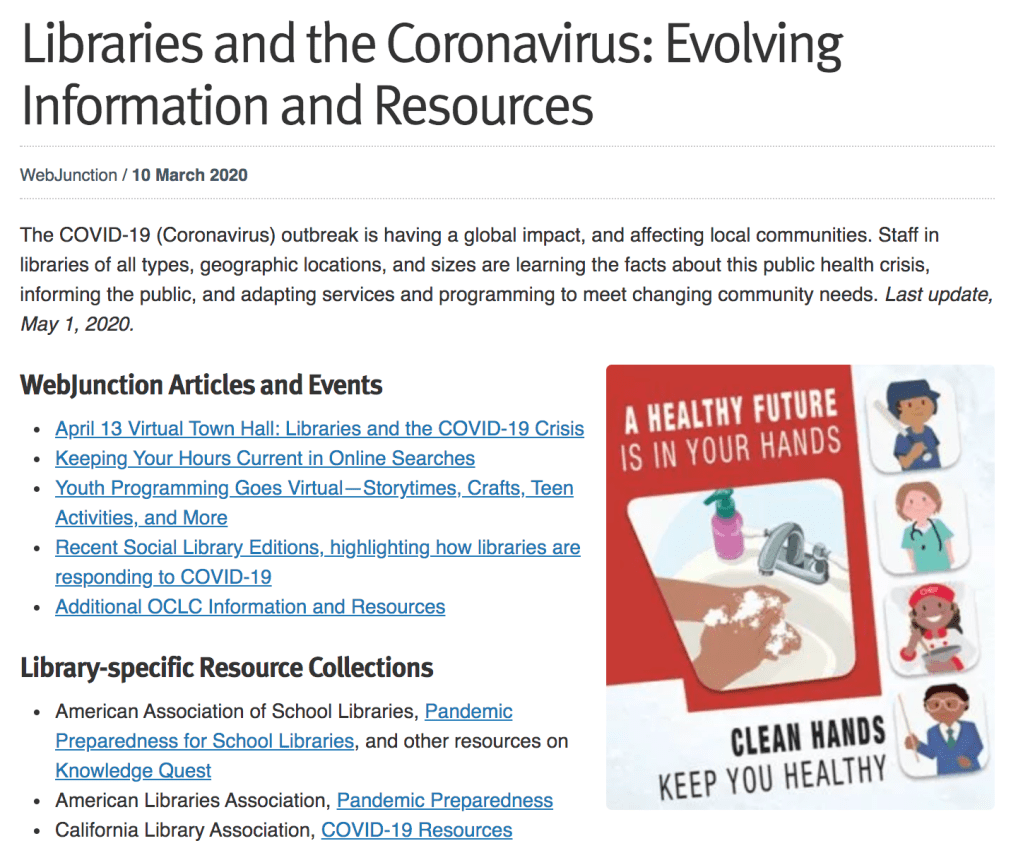
Libraries and the Coronavirus: Evolving Information and Resources
“The COVID-19 (Coronavirus) outbreak is having a global impact, and affecting local communities. Staff in libraries of all types, geographic locations, and sizes are learning the facts about this public health crisis, informing the public, and adapting services and programming to meet changing community needs. Last update, May 1, 2020.”
Pandemic Preparedness
“A pandemic is an outbreak of a disease that occurs over a wide geographic area and affects an exceptionally high proportion of the population. (Merriam-Webster Online). This page provides information about preparing for a pandemic, including library-specific policy suggestions and more universal resources on pandemic education, prevention and preparation. Some of the resources are specific to seasonal influenza outbreaks and the 2019/2020 COVID-19 pandemic, but can be used more universally to help educate and inform decisions on pandemic prevention and preparedness.”
NEWS ON COVID-19 AND THE DIGITAL DIVIDE
COVID-19: Flattening the Pandemic Curve While Upholding Digital and Information Rights:
Click here to access YouTube discussion from Columbia Law School
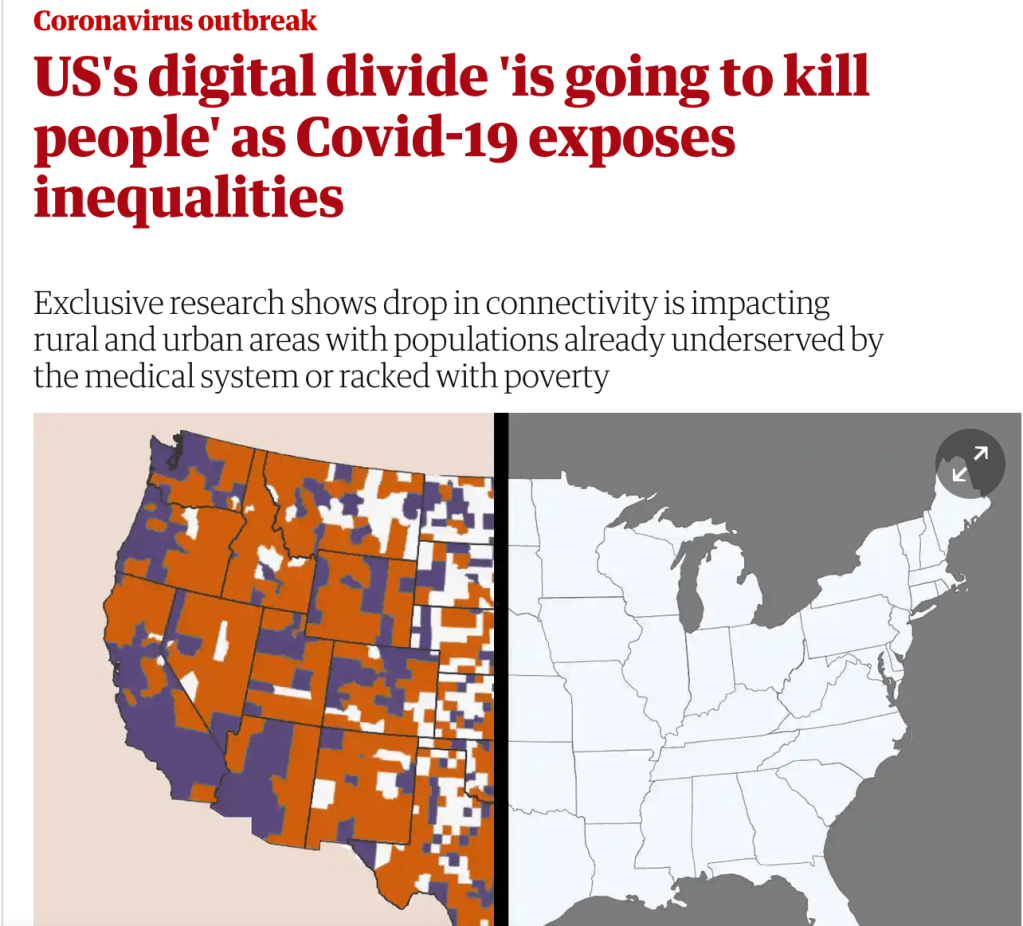
US’s digital divide ‘is going to kill people’ as Covid-19 exposes inequalities
“Exclusive research shows drop in connectivity is impacting rural and urban areas with populations already underserved by the medical system or racked with poverty.”
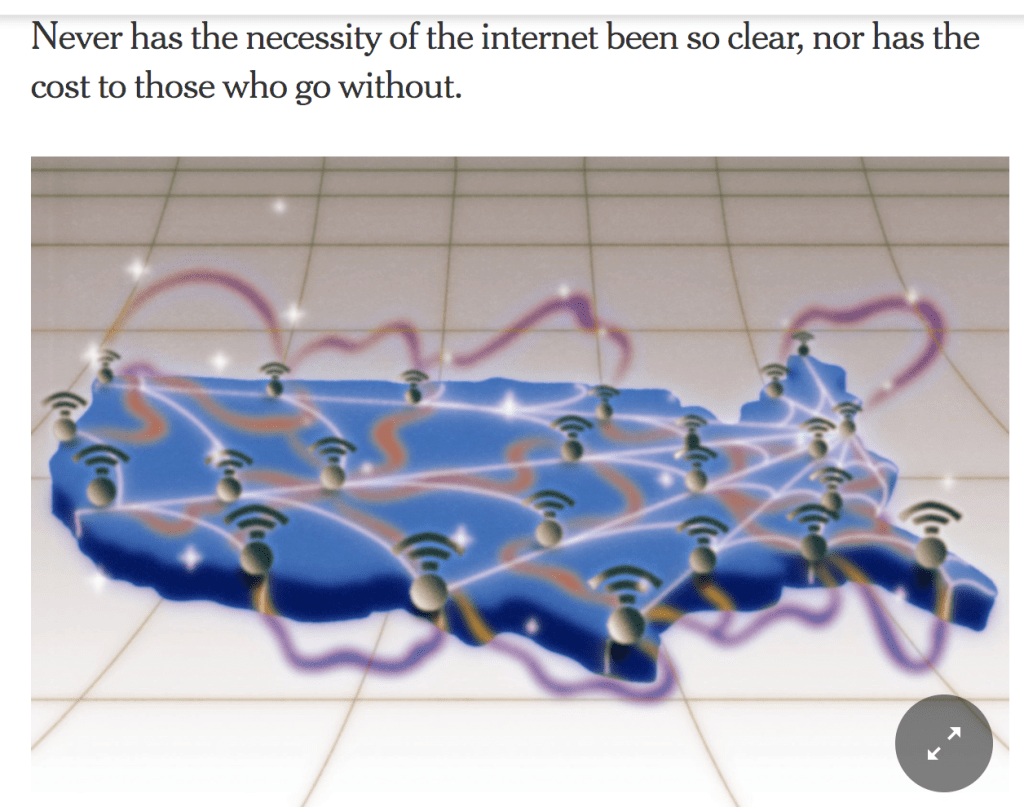
‘We Can Do Better’: One Plan to Erase America’s Digital Divide”
“With many millions of Americans working or attending virtual school from home during the coronavirus pandemic, the longstanding gap between those who have reliable, affordable internet and those who don’t has never been so clear.”
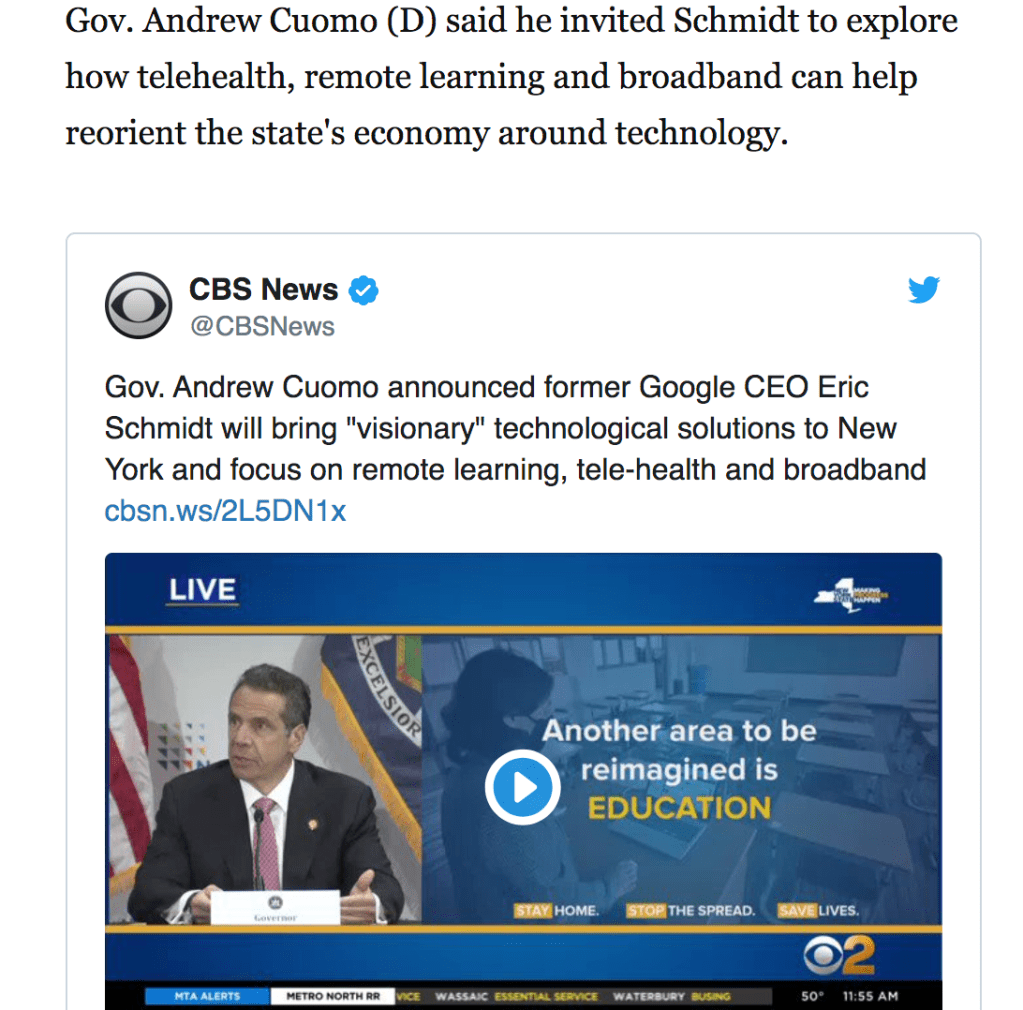
The Technology 202: Democrat wants to update Internet access plan as coronavirus exposes digital divide
“As the coronavirus crisis pushes even more of American life online, one Senate Democrat wants to be sure the government and private sector are doing all they can to ensure everyone who needs it has Internet access.”
Even In Crisis Times, There Is A Push To Wire Rural America
“As the COVID-19 crisis took hold and schools in Lockhart, Texas, had to close and shift to remote learning, the school district quickly conducted a needs assessment.
They found that half of their 6,000 students have no high-speed Internet at home. And despite being a short drive south of Austin, a third of all the students and staff live in “dead zones,” where Internet and cell service aren’t even available.”
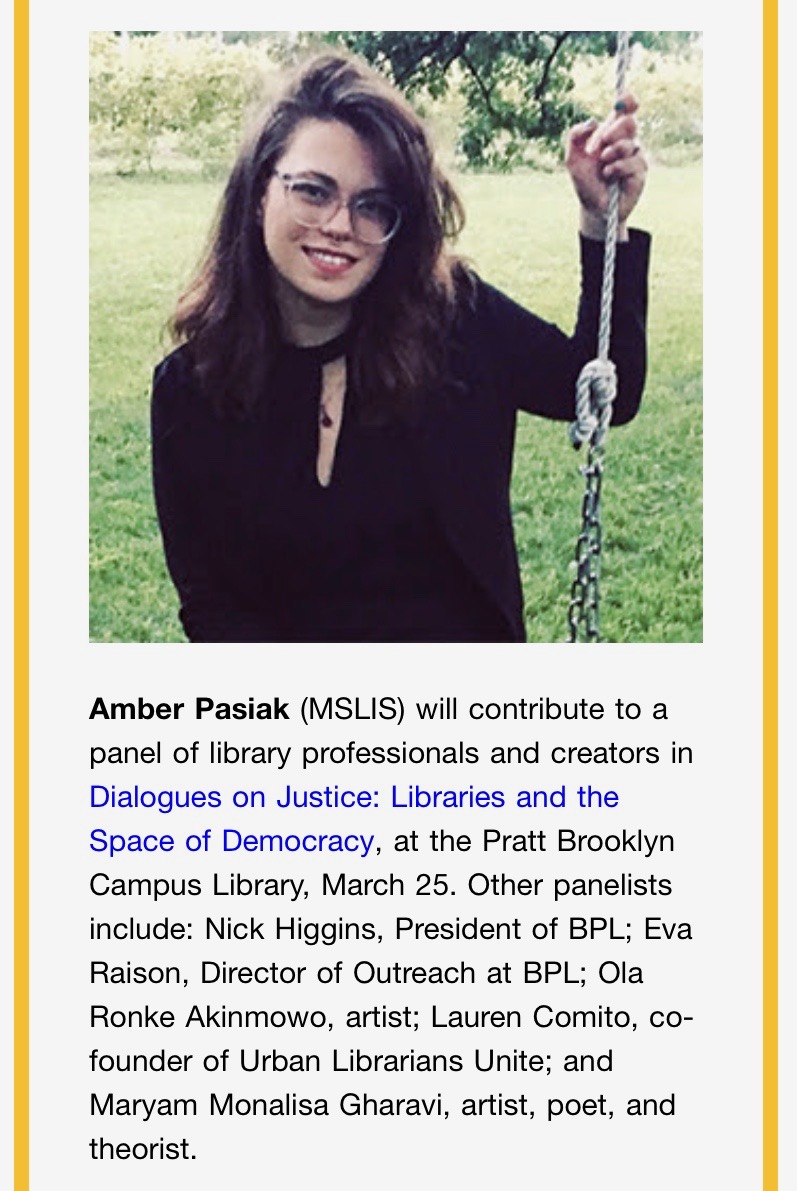
The piece above is disjointed and unfinished. I chose to showcase this with the understanding that, although messy and unprofessional, it represents my personal experience within an educational institute as well as a poetic statement on how life feels right now. This essay was meant to be representative of a student voice that is moving into the workforce, however existential questions of responsibility and the future of libraries in general arose.
Initially, I had planned on examining the argument that by making the internet more accessible, the digital divide and digital literacy could be achieved. I wanted to point out that this mindset did not take into account the new ways of information seeking and understanding that is obtained through cellphone use, nor does it include these various differences within the context of capabilities and functions. My goal was not to argue against these things but to highlight ways in which digital aspects of a library could be improved and expanded upon. I did not suppose that emphasizing and strengthening digital resources would be a cheaper option, or a replacement to physical spaces, but to reexamine assumptions on access.
Not only did my audience change but the entire landscape of this argument shifted. Infrastructure developments became highlighted in the news media and questions about the internet as a utility came to the forefront. Questions about education toolkits and access for those who are marginalized, disabled and vulnerable are widespread. The amount of opinions and suggested solutions can be overwhelming at times. I have included an annotated bibliography and links to relevant news sources that I have been following to aid in understanding how this project has transformed.
REFLECTION
May 2020
Resources:
American Library Association. (January 15, 2020). Pandemic Preparedness. American Library Association. Retrieved from http://www.ala.org/tools/atoz/pandemic-preparedness
Braman, S., (2006). Constitutional principles and the information spaces they create. In Change of state: information, policy and power. (p. 79-115). Cambridge, Massachusetts: The MIT Press.
Buschman, J. (2018). On Democracy and Libraries. Library Quarterly, (1), 23. Retrieved from https://login.ezproxy.pratt.edu/login?url=http://search.ebscohost.com/login.aspx?direct=true&db=edsgao&AN=edsgcl.526828554&site=eds-live
Cohen, D. (April 15, 2016). It’s Not Only Rich Teens That Have Smartphones To focus only on the ‘digital divide’ between desktop and laptop users is to miss an encouraging trend. The Atlantic. Retrieved from https://www.theatlantic.com/technology/archive/2016/04/not-only-rich-teens-have-cell-phones-digital-divide/478278/
Durrani, S. & Smallwood, E. (2006). The Professional is Political: Redefining the Social Role of Public Libraries. Progressive Librarian, 27. Retrieved from http://www.progressivelibrariansguild.org/PL/PL27/003.pdf
Gathegi, J., (2005). The Public library as a public forum: The (De)Evolution of a legal doctrine. The Library Quarterly 75 (1), 1-19. doi: https://doi.org/10.1086/428690
Hariharesware, S. (May 15, 2015). User Experience is a Social Justice Issue. Code 4 Lib Journal 28. Retrieved from https://journal.code4lib.org/articles/10482
Jaeger, P. T. (2011). Introduction. In Disability and the Internet : Confronting a Digital Divide. Bolder, Colorado: Lynne Rienner Publishers.
Jaeger, T., Bertot, J., Thompson, K., Katz, S. & DeCoster, E. (2012). The Intersection of Public Policy and Public Access: Digital Divides, Digital Literacy, Digital Inclusion, and Public Libraries. Public Library Quarterly, 31. Doi: https://doi.org/10.1080/01616846.2012.654728
Khan, A., Idrees, H., & Mudassir, K. (2015). Library Web sites for people with disability: accessibility evaluation of library websites in Pakistan. Library Hi Tech News, 32(6), 1–7. https://doi.org/10.1108/LHTN-01-2015-001
Kous, K., Pušnik, M., Heričko, M., & Polančič, G. (2020). Usability evaluation of a library website with different end user groups. Journal of Librarianship & Information Science, 52(1), 75–90. https://doi.org/10.1177/0961000618773133
Kowalsky, M., & Woodruff, J. (2017). Creating Inclusive Library Environments : A Planning Guide for Serving Patrons with Disabilities. ALA Editions.
McCann, S., & Peacock, R. (2019). Be an ally for accessibility: Tips for all librarians. College & Research Libraries News, 80(5), 266–268. https://doi.org/10.5860/crln.80.5.266
McDonald, P. (1997). Corporate Inroads and Librarianship: The Fight for the Soul of the Profession in the New Millennium. Progressive Librarian, 12. Retrieved from http://www.progressivelibrariansguild.org/PL/PL12_13/032.pdf
Park, E.-A. ( 1 ), & Lee, S. ( 2 ). (n.d.). Multidimensionality: Redefining the digital divide in the smartphone era. Info, 17(2), 80–96. https://doi.org/10.1108/info-09-2014-0037
Reidsma, M. (November 26, 2013). The library with a thousand databases. Matthew Reidsma Blog. Retrieved from https://matthew.reidsrow.com/articles/58
van Deursen, A. J. A. M., & van Dijk, J. A. G. M. (2019). The first-level digital divide shifts from inequalities in physical access to inequalities in material access. New Media & Society, 21(2), 354–375. Doi: https://doi.org/10.1177/1461444818797082
Yoon, K., Dols, R., Hulscher, L., & Newberry, T. (2016). An exploratory study of library website accessibility for visually impaired users. Library and Information Science Research, 38(3), 250–258. https://doi.org/10.1016/j.lisr.2016.08.006
 Amber Pasiak